T
y
p
e
s
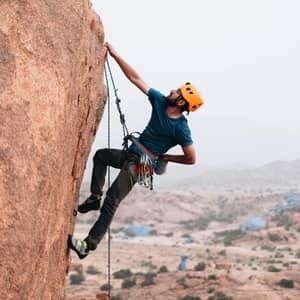
Climbing is a generic term for the variety of climbing types & techniques there are.
You can climb with a rope, without a rope, inside a hall or outside on a mountain.
Top rope climbing
This is a type of climbing where the rope is anchored to the top of the climb, and the climber is secured to the rope with a harness.
This allows the climber to focus on climbing while another person, known as the belayer, manages the rope from the ground.
Top rope climbing is considered to be a safe and accessible form of climbing, making it a great option for beginners.
Sport climbing
Sport climbing is a type of climbing where pre-placed bolts are used for protection.
This means that the route has already been equipped with bolts, and the climber simply clips their rope into the bolts as they climb.
Sport climbing is considered to be safer than traditional climbing, but it also requires less skill and experience.
Traditional climbing
Traditional climbing, also known as "trad climbing," is a type of climbing where the climber places their own protection in the rock as they climb.
This means that the climber carries a set of gear, such as camming devices, nuts, and slings, and places it in the rock as they climb to protect themselves in case of a fall.
Traditional climbing is considered to be the most traditional and pure form of climbing.
Bouldering
Bouldering is a type of climbing where the routes are short and done without a rope.
Boulderers climb on large rocks or artificial walls, and use crash pads and spotters to protect themselves in case of a fall.
Bouldering is considered to be a fun and challenging form of climbing, and it's a great way to build strength and technique.
Indoor climbing
Indoor climbing is a type of climbing that is done in a gym or other indoor setting.
Indoor climbing walls are typically made of wood or synthetic materials and are equipped with holds and routes for climbers to follow.
You can pair this type of climbing with sport climbing, top rope climbing and bouldering.
Indoor climbing is a great way to practice and improve your climbing skills in a controlled environment.
E
q
u
i
p
m
e
n
t
Equipment is important for the safety of the climber and makes climbing easier.
That's why it's the most essential thing to bring when climbing and you can't go without it.
Climbing shoes
Climbing shoes are specially designed to help you grip the rock and stay balanced while climbing.
They have a close fit and a sticky rubber sole that provides traction on small holds and edges.
There are different variants for different types of climbing.
Harness
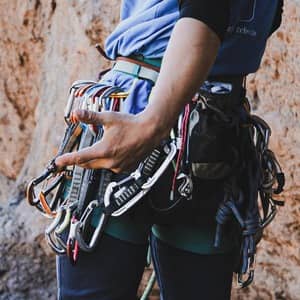
A harness is worn around the waist and legs and is used to secure the climber to the rope.
You can also attach a chalk bag and quickdrawers to it so you have easy access to them.
It's important to choose a harness that is comfortable and fits properly.
Rope
Ropes are used for protection and to catch a fall.
They come in different lengths and diameters and are designed for different types of climbing.
For example, a thicker rope is more durable, but a thinner rope is more lightweight.
Belay device
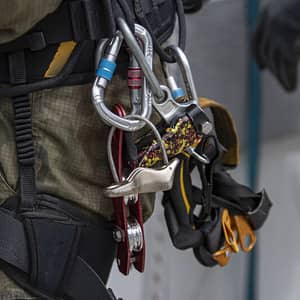
A belay device is a piece of equipment that is used to control the rope while belaying.
It allows the belayer to hold the rope in place and thus secure the climber,
or to slowly lower the climber down.
Chalk and Chalk bag
Chalk is used to dry the climber's hands and increase friction.
Chalk bags are small pouches used to store and dispense chalk.
You attach them on the harness to reach the pouch easily.
Quickdraws
Quickdraws are used to attach the rope to the pre-placed bolts or anchors on sport climbing routes.
They consist of two carabiners attached to a piece of webbing,
and they come in different lengths to accommodate different types of routes.
Helmet
A helmet is an essential piece of equipment that provides protection for the head in case of a fall.
They come in different shapes, sizes and colors and can be worn for climbing, mountaineering, and even caving.
They are not necessary if you are climbing indoor.
Personal climbing protection
Those are used for traditional climbing. Personal climbing protection like cams, nuts, and
slings are used to place in or in between the rocks to secure yourself from falling.
H
i
s
t
o
r
y
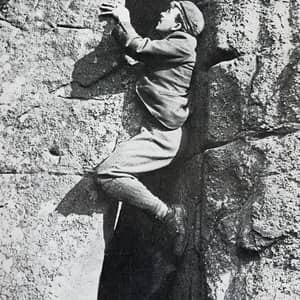
Climbing is a sport that has a long history dating back to ancient times.
From the earliest days of human civilization, people have been climbing for a variety of reasons,
including hunting, religious rituals, and exploration. The sport of climbing as we know it today
however, has evolved over the centuries and has become a popular pastime for people of all ages and abilities.
First known encounter
The earliest known form of rock climbing was done by ancient civilizations such as the Incas in South America and the Chinese in Asia.
These early climbers climbed cliffs and mountains for religious or ceremonial reasons, using basic equipment such as wooden pegs and rope ladders.
19th century
In the late 1800s, rock climbing began to be done for recreation and as a way to explore the outdoors.
Climbers used basic equipment such as ropes and wooden pegs to protect themselves while climbing.
The first recorded climbing club, the Alpine Club, was founded in London in 1857, which marked the beginning of the sport of mountaineering.
The club's members were among the first to climb many of the Alpine peaks, including the Matterhorn in Switzerland, which was first climbed in 1865.
20th century
During the early 1900s, climbers began to develop new techniques and equipment, such as the use of metal pitons and carabiners.
This allowed climbers to tackle more difficult routes and led to the creation of the modern sport of rock climbing.
Climbers also started to explore new climbing areas and climbing styles.
For example, in the 1920s, German climber Otto Herzog developed a new style of climbing called aid climbing,
where climbers used equipment such as pitons and ladders to assist them in climbing.
Rising popularity
In the 1960s and 1970s, rock climbing experienced a surge in popularity.
Climbers began to push the limits of what was possible by climbing taller and more challenging routes.
This led to the creation of new styles of climbing, such as sport climbing, where climbers use pre-placed bolts for protection,
and bouldering, where climbers climb short routes without a rope.
Climbers also started to explore new climbing areas around the world, such as Yosemite National Park in California,
which became a popular destination for climbers.
The present
In the last few decades, rock climbing has become a mainstream sport,
with climbing gyms popping up all over the world, making it more accessible for people to try out climbing.
The sport also became more professional and competitive, with climbing competitions and events held around the world.